
Gi vs No-Gi BJJ: What's the Difference?
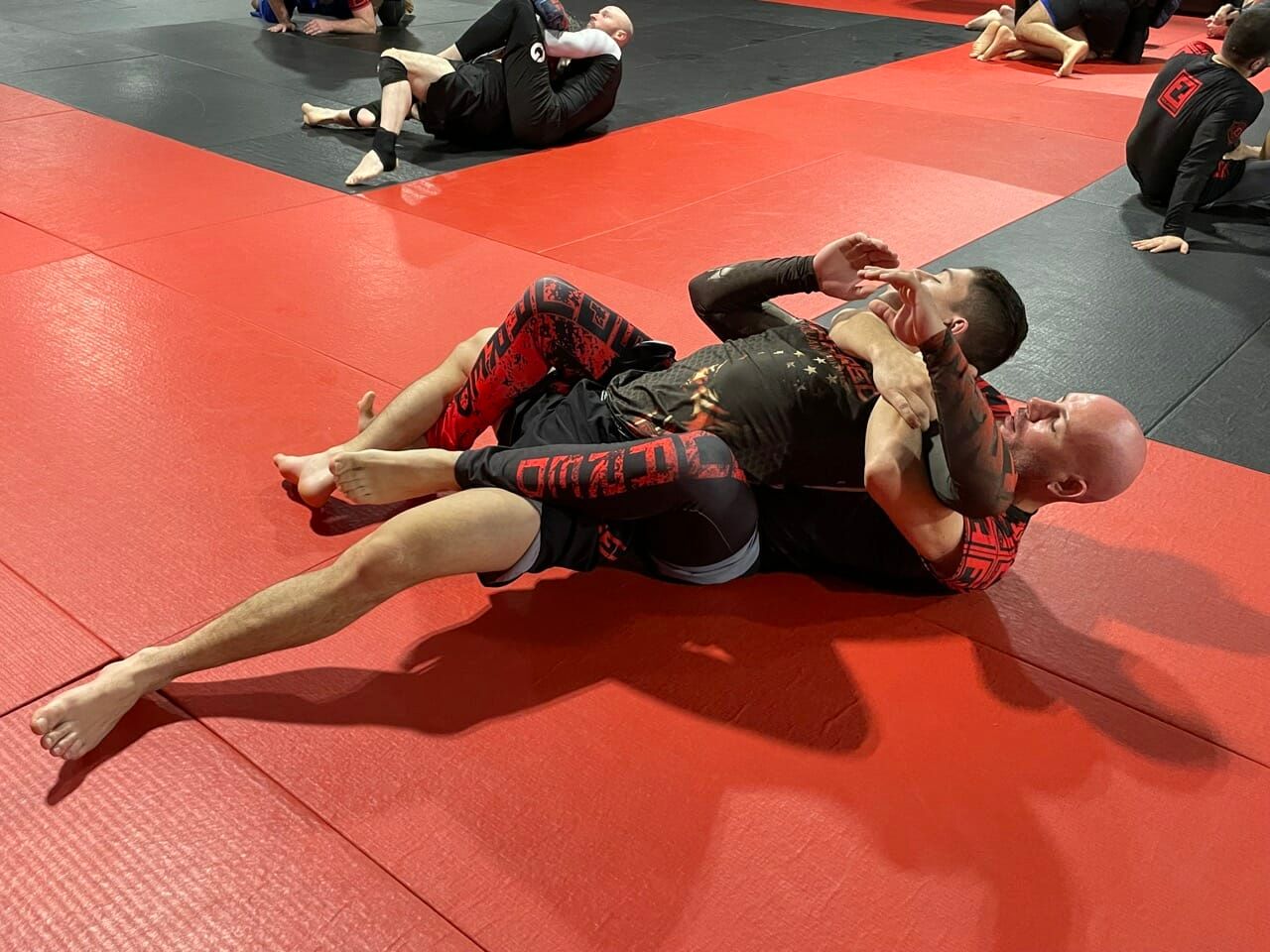
The difference between gi and no-gi jiu-jitsu comes down to clothing and grips. In gi BJJ, you wear a heavy cotton kimono and can grab the collar, sleeves and pants. In no-gi, you wear a rash guard and shorts, so you can only grip the body, arms, legs and head. That one change shifts the pace, the techniques and how the sport feels.
Both are real jiu-jitsu. Both build the same core skills. Here is how they compare and how to decide where to start.
What is no-gi?
No-gi is Brazilian Jiu-Jitsu without the traditional uniform. Instead of a gi, you wear a fitted rash guard (a stretchy athletic shirt) and shorts or spats (tight leggings). It is sometimes called submission grappling.
No-gi grew quickly with mixed martial arts, because MMA fighters do not wear a gi. Big no-gi events like ADCC have also made it popular as a sport of its own.
What is the gi?
The gi is the uniform BJJ inherited from judo: a thick jacket, matching pants and a belt that shows your rank. It is built to be grabbed and pulled without tearing. In gi training, the fabric becomes a tool. You can use your partner’s collar for chokes, their sleeves to control their arms and their pants to stop them moving.
The main differences
| Gi | No-gi | |
|---|---|---|
| Clothing | Kimono jacket, pants, belt | Rash guard, shorts or spats |
| Grips | Collar, sleeves, pants, belt | Wrists, arms, neck, body, legs |
| Pace | Slower, more methodical | Faster, more scrambles |
| Friction | High, hard to slip out | Low, sweat makes escapes easier |
| Chokes | Many use the collar | Arm and body chokes only |
| Leg locks | Limited, especially for beginners | Often a bigger part of the game |
| Rank | Belts worn and awarded in class | Many schools still award belts, but none are worn |
Grips and control
In the gi, a strong grip on a sleeve or collar can control a whole exchange. That makes the game more patient. You can hold a position for a long time and set up attacks slowly.
Without the gi, there is less to hold, so control comes from body position: underhooks, overhooks, wrist control and head position. The game feels quicker.
Pace and friction
A cotton gi creates friction. It is harder to slide out of a bad position, so escapes need better technique. In no-gi, a little sweat can make you slippery, so scrambles happen more often and fast athletes can shine.
Submissions
Many classic gi chokes use the lapel or collar, so they disappear in no-gi. In their place, no-gi players lean on arm-triangles, guillotines and rear-naked chokes. No-gi also tends to put more focus on leg locks. Some rule sets allow advanced techniques such as heel hooks only for experienced, higher-belt adults, because they can cause serious injury if applied carelessly.
Which is better for self-defense?
Both have value. On the street, people wear clothes, so gi skills like using a jacket or collar for control carry over. At the same time, no-gi trains you to control someone without relying on fabric, which matches a summer T-shirt or a slippery jacket, and matches MMA.
Most coaches agree that the best self-defense grappler trains both. If self-defense is your main reason to start, our guide to the benefits of jiu-jitsu for adults and self-defense covers what BJJ does well and where its limits are.
Should a beginner start with gi or no-gi?
There is no wrong choice. Some general guidance:
- Start with the gi if you like the idea of a slower, more technical game, or if you plan to earn belts in a traditional way. Many coaches feel the gi teaches patience and precise control early.
- Start with no-gi if you are interested in MMA, prefer lighter clothing, or want a faster style from day one.
- Try both if your school offers both. A few weeks of each will tell you a lot about what you enjoy.
The skills overlap heavily. Positions like guard, mount, side control and back control are the same. Escapes are the same. Most of what you learn in one will help you in the other.
Gear for each style
What you need for gi classes
- A BJJ gi (jacket and pants) and a belt. Many schools let you try your first class without one.
- Optional: a rash guard to wear under the jacket.
What you need for no-gi classes
- A rash guard or a fitted athletic shirt.
- Shorts without pockets or zippers, or spats.
- Optional: a mouthguard.
For both: trimmed nails, no jewelry and clean training clothes every session. We go deeper in your first BJJ class: what to wear and what to expect.
Does no-gi have belts?
Yes, in most schools. Even though you do not wear a belt in no-gi class, many academies give no-gi students the same belt ranks used in the gi. Some award separate no-gi ranks. The ladder (white, blue, purple, brown, black) is the same. Read BJJ belt ranks explained for the full system.
Training gi and no-gi in Leominster
Squared runs both. The No-Gi Grappling program is fast submission grappling in shorts and a rash guard for ages 14 and up. The Brazilian Jiu-Jitsu program is the gi program for the same age group, coached by 5th- and 6th-degree black belts Gabriel Gonzaga and Luis Soto.
If you are in Leominster, Fitchburg, Sterling, Clinton or Lancaster and cannot decide which to try, you do not have to guess. Book a free trial class, tell us what you are curious about, and see which style clicks for you.