
How Long Does It Take to Get a BJJ Black Belt?
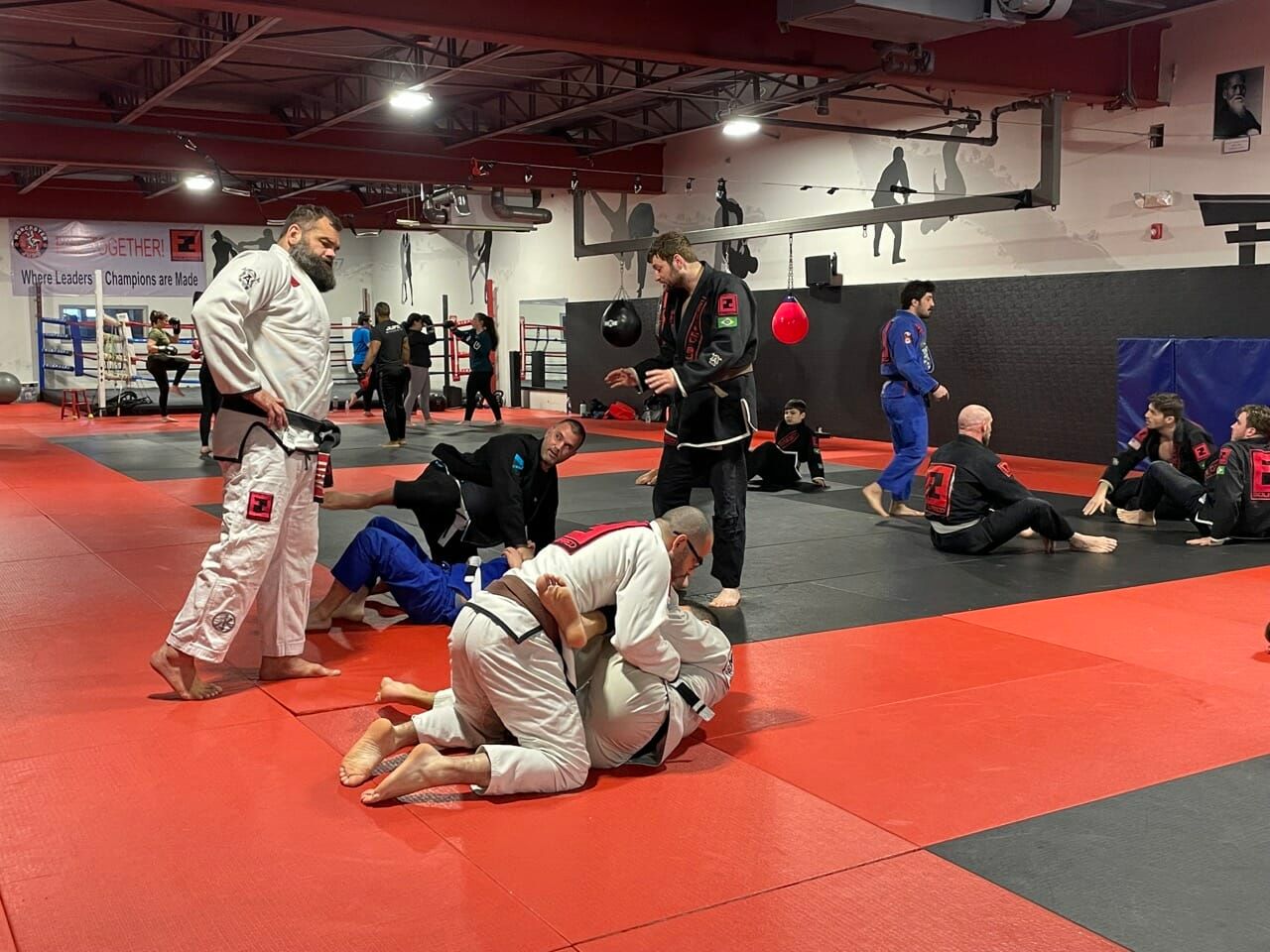
For most people, a black belt in Brazilian Jiu-Jitsu takes about 8 to 12 years of steady training, and around 10 years is a common estimate. A few people get there in 6 or 7 years. Many take 15 or more. All of those are normal.
The exact number depends on how often you train, how you train and your school’s standards. Below is a belt-by-belt breakdown, the rules that set the minimum, and the things that actually speed you up.
Why it takes so long
BJJ has no shortcuts because there is no scripted test. You earn each belt by showing skill against partners who are resisting for real. Your coach sees you roll week after week and promotes you when your jiu-jitsu matches the next rank.
That is also why a BJJ black belt is respected. It cannot be bought, and it cannot be faked on the mat.
Typical time at each belt
These are general ranges for an adult training about two to four times a week. They vary by school and by training frequency, so treat them as a rough guide, not a promise.
| Belt | Typical time at this belt | Running total |
|---|---|---|
| White | 1–3 years | 1–3 years |
| Blue | 2–3 years | 3–6 years |
| Purple | 1.5–3 years | 4.5–9 years |
| Brown | 1–2 years | 5.5–11 years |
| Black | — | about 8–12 years is most common |
Real timelines are rarely neat. Injuries, new jobs, moving and kids all slow people down for a while. That is fine. Jiu-jitsu is a long game.
The minimum rules
The International Brazilian Jiu-Jitsu Federation (IBJJF), the largest BJJ organization, sets some minimum ages and minimum time at certain belts for its members:
- Blue belt: minimum age 16, at least 2 years before purple.
- Purple belt: minimum age 16, at least 1.5 years before brown.
- Brown belt: minimum age 18, at least 1 year before black.
- Black belt: minimum age 19.
There is no IBJJF minimum time at white belt. Add those numbers up and the fastest legal path from blue to black is about four and a half years, plus however long white belt took. Almost nobody moves that fast. Coaches outside the IBJJF set their own standards, but most land in the same general range.
For a full guide to every belt, stripe and degree, including what happens after black belt, read BJJ belt ranks explained.
What actually speeds up progress
1. Training consistently
Consistency beats intensity. Three classes a week for five years will take you further than six classes a week for six months followed by a long break. Pick a schedule you can keep through busy seasons.
2. Rolling with a plan
Live rolling is where techniques become skills. Go into each round with one small goal: escape side control, hold mount, try one guard pass. Over time those small goals stack up.
3. Asking questions
Coaches love good questions. If something fails in a roll, ask after class what went wrong. One clear answer can save you months of guessing.
4. Staying healthy
The fastest way to slow down is to get hurt. Tap early, tap often, warm up properly and pick sensible training partners. Showing up every week for years beats a hard month and a long injury.
5. Training both gi and no-gi
Many people find that cross-training helps. The gi teaches patience, grips and precise control. No-gi teaches speed and positions that do not rely on fabric. Our guide to gi vs no-gi BJJ explains what each one builds.
6. Competing, if you want to
Competing is optional, but it can push your growth. A tournament shows you exactly where your game holds up under pressure. Plenty of people earn black belts without ever competing, though.
What slows people down
- Long breaks. A few months off is normal. Years off means rebuilding.
- Ego. Refusing to tap, or only rolling with people you can beat, limits learning.
- Skipping fundamentals. Fancy moves are fun, but escapes and positions win most rounds.
- Chasing the belt. People who obsess over promotions tend to get frustrated. People who chase skill tend to get promoted.
Does age matter?
You can start BJJ at almost any age. Adults in their 30s, 40s and 50s earn black belts regularly. It may take a little longer if recovery is slower or training time is tight, but the path is the same.
The IBJJF even runs Masters divisions in competition for athletes aged 30 and up, which shows how many adults keep training for decades. Gabriel Gonzaga, one of Squared’s head coaches, is a multiple-time IBJJF Masters World Champion.
What happens after black belt?
Black belt is not the end. Under IBJJF rules, black belts earn degrees over time: the first three take at least three years each, and degrees four through six take at least five years each. Squared’s head coaches are a 5th-degree black belt (Gabriel Gonzaga) and a 6th-degree black belt (Luis Soto), which gives you a sense of how many years sit behind ranks like that.
Is it worth it?
If the only goal is the belt, ten years can sound like a lot. But most people who stay in BJJ say the belt is the least interesting part. Every stage brings something: getting fitter, getting calmer under pressure, making friends on the mat and finally landing that move you have drilled for months.
The best time to start the clock is now. Even at white belt, you will notice changes within your first few months.
Start your path in Leominster
Squared’s Brazilian Jiu-Jitsu program is for ages 14 and up, and beginners are welcome. If you live in Leominster, Fitchburg, Sterling or nearby in central Massachusetts, book a free trial class and take the first step toward that black belt.